
• Smart TVs for Modern Homes: Features, Benefits, Buying Guide, FAQs, and Best Models in 2026

    Smart TVs for Modern Homes: Features, Benefits, Buying Guide, FAQs, and Best Models in 2026

    Smart TVs for Modern Homes: Features, Benefits, Buying Guide, FAQs, and Best Models in 2026 A Smart TV is one of the best upgrades you can make for your home. It does much more than show regular TV channels. With internet access, built-in apps, and excellent picture quality, a Smart TV lets you enjoy movies,…


  • Smart Washing Machines for Modern Homes: Complete Buying Guide 2026

    Smart Washing Machines for Modern Homes: Complete Buying Guide 2026

    Doing laundry is a regular household task, but modern technology has made it easier than ever. Smart washing machines are designed to save time, improve efficiency, and give homeowners more control over their laundry routines. With features like smartphone controls, automatic detergent dispensing, and energy-saving technology, smart washing machines are becoming a popular choice for…


  • Smart Treadmills for Home Fitness: Complete Buying Guide 2026

    Smart Treadmills for Home Fitness: Complete Buying Guide 2026

    Smart Treadmills for Home Fitness: Features, Benefits, Costs, and Buying Guide Home fitness has become increasingly popular, and treadmills remain one of the most effective and convenient exercise machines available. Today’s smart treadmills offer far more than basic walking and running capabilities. With advanced technology, interactive workouts, and fitness tracking features, they can transform any…


  • Smart Vacuums for Modern Homes: Complete Buying Guide 2026

    Smart Vacuums for Modern Homes: Complete Buying Guide 2026

    Keeping a home clean can be challenging, especially for busy families, working professionals, and pet owners. Fortunately, smart vacuum technology has transformed household cleaning by automating one of the most time-consuming chores. Smart vacuums, often called robot vacuums, use advanced sensors, mapping technology, and mobile apps to clean floors with minimal human intervention. As these…


  • Electric Car Maintenance: The Ultimate Guide to Keeping Your Electric Vehicle Running Smoothly

    Ahhh yes — electric car maintenance. The silent revolution gliding on electrons, not explosions. While ICE (internal combustion engine) cars chug oil and demand tune-ups like toddlers asking for snacks, EVs are like zen masters — low-maintenance, clean, and shockingly simple (pun 1000% intended). You ready for a full-throttle breakdown? Let’s go with: ⚡ Electric Car Maintenance: The Ultimate Guide…


  • Top Smart Home Appliances and Devices in 2025

    1. Smart Thermostat Example Models: Google Nest Learning Thermostat, Ecobee Smart Thermostat PremiumPrice Range: $150–$250Key Specs: 2. Smart Speaker Example Models: Amazon Echo (4th Gen), Google Nest Audio, Apple HomePod 2Price Range: $50–$300Key Specs: 3. Smart Lighting System Example Models: Philips Hue, LIFX, NanoleafPrice Range: $30–$200 per bulb/panelKey Specs: 4. Smart Security Camera Example Models: Arlo Pro 4, Google Nest Cam (Battery),…


Prime News

Just another news website


Copyright 2024 ©

Category: Technology

  • Smart TVs for Modern Homes: Features, Benefits, Buying Guide, FAQs, and Best Models in 2026

    Smart TVs for Modern Homes: Features, Benefits, Buying Guide, FAQs, and Best Models in 2026

    Smart TVs for Modern Homes: Features, Benefits, Buying Guide, FAQs, and Best Models in 2026

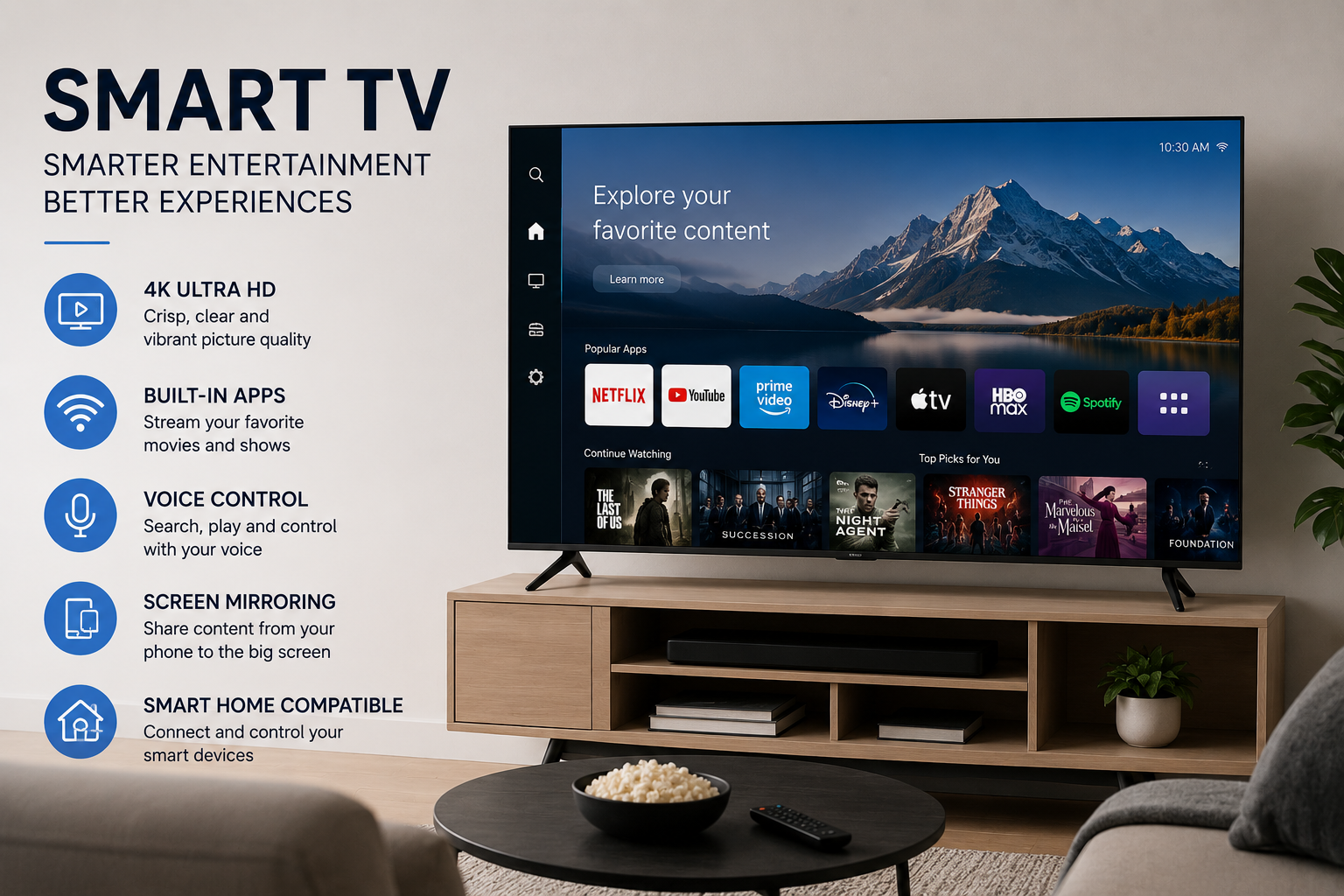
    A Smart TV is one of the best upgrades you can make for your home. It does much more than show regular TV channels. With internet access, built-in apps, and excellent picture quality, a Smart TV lets you enjoy movies, live sports, games, music, and online videos from one device.

    Today, Smart TVs are available in many sizes and price ranges. Whether you’re buying your first Smart TV or replacing an older television, this guide will help you understand the important features and choose the right model for your home.

    What Is a Smart TV?

    A Smart TV is a television that connects to the internet through Wi-Fi or an Ethernet cable. It comes with built-in apps that allow you to stream movies, TV shows, sports, and music without needing a separate streaming device.

    Many Smart TVs also support voice assistants, smartphone screen sharing, and automatic software updates.

    Benefits of a Smart TV

    Watch Your Favorite Streaming Services

    Most Smart TVs include popular streaming apps, allowing you to watch thousands of movies and TV shows whenever you want.

    Better Picture Quality

    Modern Smart TVs offer bright colors, sharp images, and smooth motion, making movies and sports more enjoyable.

    Internet Browsing

    Some Smart TVs include a web browser, allowing you to visit websites or search for information directly from your television.

    Voice Control

    Many Smart TVs allow you to search for movies, adjust the volume, or change channels using simple voice commands.

    Connect Your Smartphone

    You can easily display photos, videos, games, or presentations from your smartphone or tablet on a larger screen.

    Smart Home Compatibility

    Some Smart TVs can work with compatible smart home devices, giving you more control over your connected home.

    Important Features to Look For

    4K Resolution

    A 4K TV provides much sharper images than Full HD, making movies and games look more realistic.

    HDR Support

    HDR improves brightness, contrast, and colors for a better viewing experience.

    Wi-Fi Connectivity

    Built-in Wi-Fi allows your TV to connect to the internet without extra cables.

    Bluetooth

    Bluetooth lets you connect wireless headphones, speakers, keyboards, and gaming controllers.

    HDMI Ports

    Having multiple HDMI ports makes it easy to connect gaming consoles, soundbars, Blu-ray players, and streaming devices.

    Fast Operating System

    A responsive operating system makes it easier to switch between apps and navigate menus quickly.

    Different Types of Smart TVs

    LED Smart TVs

    LED TVs are affordable, reliable, and perfect for everyday viewing.

    Best for:

    • Families
    • Students
    • Budget-conscious buyers

    QLED Smart TVs

    QLED TVs produce brighter colors and perform well in bright rooms.

    Best for:

    • Sports fans
    • Bright living rooms
    • Everyday entertainment

    OLED Smart TVs

    OLED technology delivers outstanding picture quality with deep black levels and vibrant colors.

    Best for:

    • Movie lovers
    • Home theaters
    • Gamers

    Mini-LED Smart TVs

    Mini-LED TVs combine excellent brightness with improved contrast, making them a great choice for premium viewing.

    Best for:

    • Large rooms
    • Family entertainment
    • Premium viewing experiences

    Smart TV Price Guide

    Price RangeWhat You Can Expect
    $200–$500Basic Smart TVs with Full HD or entry-level 4K
    $500–$1,000Larger screens, HDR support, and better performance
    $1,000–$2,500Premium QLED or OLED displays with advanced features
    $2,500+Luxury Smart TVs with top-tier picture quality and large screens

    Who Should Buy a Smart TV?

    A Smart TV is ideal for:

    • Families
    • Movie lovers
    • Sports fans
    • Gamers
    • Students
    • Remote workers
    • Anyone upgrading an older television

    Tips Before Buying

    Before making your purchase, consider the following:

    • Measure your available space.
    • Choose a screen size that fits your room.
    • Decide whether you need LED, QLED, OLED, or Mini-LED technology.
    • Check the number of HDMI and USB ports.
    • Compare energy efficiency ratings.
    • Read customer reviews before buying.

    Maintenance Tips

    To keep your Smart TV working properly:

    • Clean the screen with a soft microfiber cloth.
    • Keep the TV away from direct sunlight.
    • Do not spray cleaning liquids directly onto the screen.
    • Install software updates when available.
    • Use a surge protector to help protect against electrical damage.

    Proper care can help your television last for many years.

    Frequently Asked Questions (FAQ)

    What is the difference between a Smart TV and a regular TV?

    A Smart TV connects to the internet and includes built-in streaming apps. A regular TV requires additional devices to access online content.

    Do I need internet for a Smart TV?

    Internet is required for streaming apps, software updates, and online features. However, you can still watch cable TV, DVDs, or play games without an internet connection.

    Is 4K better than Full HD?

    Yes. A 4K TV offers higher resolution, sharper images, and more detailed picture quality than Full HD.

    Which screen size is best?

    • 32–43 inches for bedrooms
    • 50–55 inches for medium-sized living rooms
    • 65–75 inches for larger spaces
    • 85 inches or larger for home theaters

    Can I connect my phone to a Smart TV?

    Yes. Most Smart TVs support wireless screen mirroring or casting from compatible smartphones and tablets.

    How long does a Smart TV last?

    Most quality Smart TVs last between 7 and 10 years with proper maintenance.

    Most Popular Smart TVs in 2026

    Several Smart TVs have become popular because of their excellent performance, value, and customer satisfaction.

    Samsung Crystal UHD Series

    A reliable choice for everyday viewing with sharp 4K picture quality and an easy-to-use interface.

    Best For: Families and general entertainment.

    LG OLED evo Series

    Known for outstanding picture quality, deep black levels, and vibrant colors.

    Best For: Movie lovers and home theater enthusiasts.

    Sony BRAVIA Series

    Offers excellent color accuracy and smooth motion, making it a favorite for sports and movies.

    Best For: Premium entertainment.

    TCL Mini-LED Series

    Provides bright images and strong gaming performance at an affordable price.

    Best For: Budget-conscious buyers and gamers.

    Hisense U Series

    Combines advanced features with competitive pricing, offering excellent value for money.

    Best For: Families looking for premium features without a premium price.

    Final Thoughts

    A Smart TV is more than just a television—it’s an all-in-one entertainment center. Whether you enjoy streaming movies, watching live sports, gaming, or browsing online content, today’s Smart TVs make entertainment easier and more enjoyable.

    Before buying, compare screen size, display technology, features, and your budget. Taking the time to choose the right model will help you enjoy years of high-quality entertainment.

    With so many excellent options available in 2026, there is a Smart TV for every home and every budget.
  • Smart Washing Machines for Modern Homes: Complete Buying Guide 2026

    Smart Washing Machines for Modern Homes: Complete Buying Guide 2026

    Doing laundry is a regular household task, but modern technology has made it easier than ever. Smart washing machines are designed to save time, improve efficiency, and give homeowners more control over their laundry routines.

    With features like smartphone controls, automatic detergent dispensing, and energy-saving technology, smart washing machines are becoming a popular choice for families and busy households.

    In this guide, you’ll learn what smart washing machines are, their benefits, important features, pricing, and tips for choosing the right model for your home.

    What Is a Smart Washing Machine?

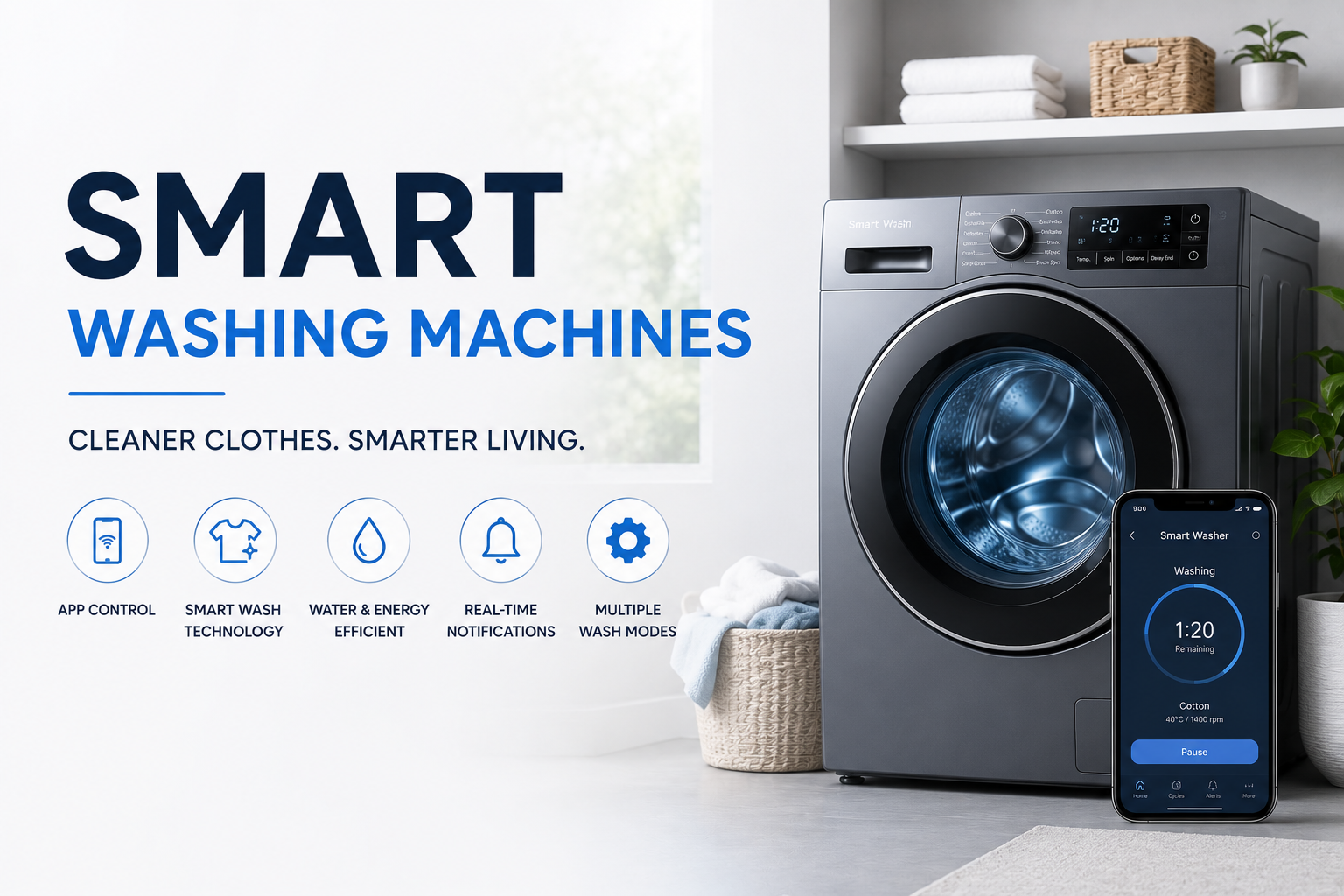
    A smart washing machine is a washer that connects to your home’s Wi-Fi network and can be controlled using a smartphone app. These machines often include advanced sensors and automation features that help improve washing performance while using less water and electricity.

    Many models can send notifications when a wash cycle is complete and allow users to start or monitor laundry remotely.

    Benefits of Smart Washing Machines

    Saves Time

    Smart washing machines can automate many laundry tasks, helping users spend less time managing loads and more time on other activities.

    Remote Control

    Using a mobile app, you can start, pause, or monitor your washing machine from almost anywhere.

    Energy Efficiency

    Many smart washers are designed to reduce water and energy consumption, which may help lower utility bills over time.

    Better Cleaning Performance

    Advanced sensors automatically adjust water levels, wash times, and spin speeds based on the size and type of each load.

    Helpful Notifications

    Users receive alerts when cycles finish, when maintenance is needed, or when detergent levels are low.

    Key Features to Look For

    Wi-Fi Connectivity

    Wi-Fi allows the washing machine to connect with your smartphone for remote access and monitoring.

    Mobile App Control

    Most smart washing machines include apps that allow users to:

    • Start and stop cycles
    • Check wash progress
    • Receive notifications
    • Download specialized wash programs

    Automatic Detergent Dispensing

    Some models can store detergent and automatically release the correct amount for each load.

    Energy-Saving Modes

    Eco-friendly settings help reduce water and electricity usage without sacrificing cleaning performance.

    Voice Assistant Compatibility

    Certain models work with smart home systems, allowing voice control for added convenience.

    Smart Sensors

    Built-in sensors detect fabric type, load size, and soil levels to optimize washing performance.

    Types of Smart Washing Machines

    Top-Load Washers

    Top-load machines are easy to use and often complete wash cycles more quickly.

    Best for:

    • Families
    • Large laundry loads
    • Users seeking simple operation

    Front-Load Washers

    Front-load washers are known for their efficiency, cleaning performance, and lower water consumption.

    Best for:

    • Energy-conscious households
    • Smaller laundry rooms
    • Gentle fabric care

    Washer-Dryer Combos

    These machines combine washing and drying functions into a single unit, making them ideal for limited spaces.

    Best for:

    • Apartments
    • Condos
    • Small homes

    How Much Do Smart Washing Machines Cost?

    The price depends on capacity, technology, and brand features.

    Price RangeFeatures
    $500–$800Basic smart controls and standard washing programs
    $800–$1,200Wi-Fi connectivity, advanced sensors, energy-saving features
    $1,200–$2,000Premium performance, larger capacity, automatic detergent systems
    $2,000+Luxury models with advanced smart home integration and premium features

    A quality smart washer can provide long-term convenience and efficiency for most households.

    Who Should Buy a Smart Washing Machine?

    Smart washing machines are a great option for:

    • Busy professionals
    • Families with children
    • Smart home users
    • Seniors
    • Homeowners looking to reduce utility costs
    • Anyone wanting a more convenient laundry experience

    Maintenance Tips

    To keep your washing machine running smoothly:

    • Clean the detergent drawer regularly
    • Leave the door open after washing to prevent odors
    • Check and clean filters as needed
    • Wipe the drum periodically
    • Use the recommended amount of detergent
    • Run cleaning cycles according to the manufacturer’s instructions

    Regular maintenance helps improve performance and extend the machine’s lifespan.

    Future Trends in Smart Laundry Technology

    Smart washing machines continue to become more advanced. New models are introducing artificial intelligence that learns user habits and automatically recommends wash settings.

    Future machines may offer even better energy efficiency, predictive maintenance alerts, and deeper integration with smart home systems.

    Final Thoughts

    Smart washing machines make laundry easier, more efficient, and more convenient. From remote controls to automatic settings, these appliances help simplify one of the most common household chores.

    By comparing features, capacity, energy efficiency, and budget, homeowners can find a smart washing machine that fits their needs and lifestyle.

    Whether you live alone, have a growing family, or simply want to modernize your home, a smart washing machine can be a valuable addition that saves time and improves everyday convenience.

  • Smart Treadmills for Home Fitness: Complete Buying Guide 2026

    Smart Treadmills for Home Fitness: Complete Buying Guide 2026

    Smart Treadmills for Home Fitness: Features, Benefits, Costs, and Buying Guide

    Home fitness has become increasingly popular, and treadmills remain one of the most effective and convenient exercise machines available. Today’s smart treadmills offer far more than basic walking and running capabilities. With advanced technology, interactive workouts, and fitness tracking features, they can transform any room into a personal fitness center.

    Whether you’re a beginner looking to improve your health or a seasoned runner training year-round, a smart treadmill can help you achieve your fitness goals without leaving home.

    What Is a Smart Treadmill?

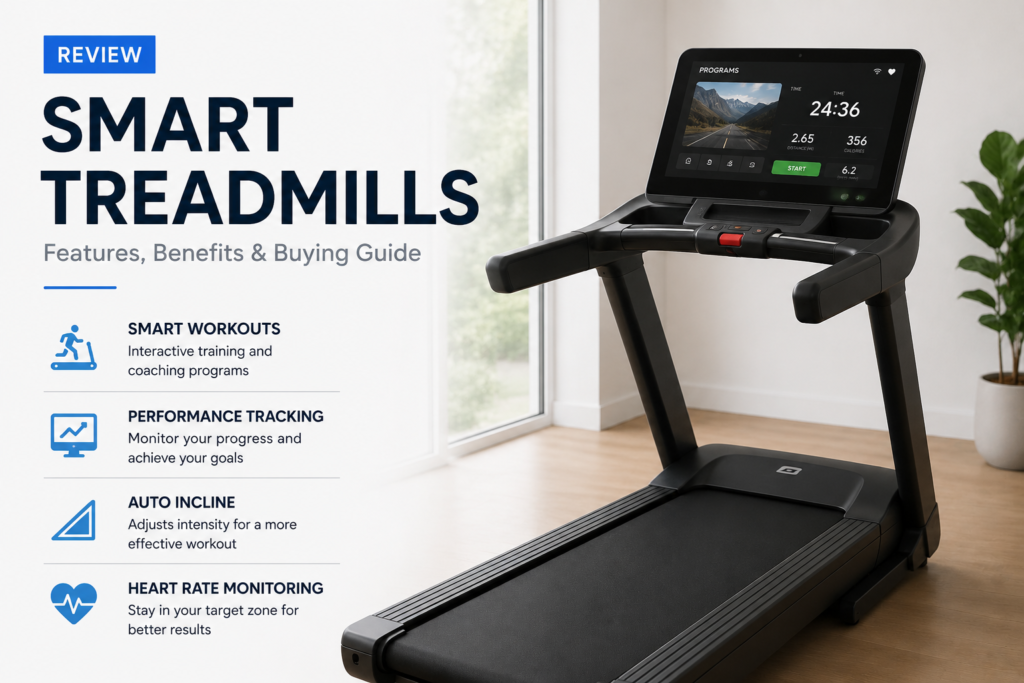
    A smart treadmill combines traditional cardio exercise equipment with modern technology. These machines often feature touchscreen displays, internet connectivity, workout apps, performance tracking, and integration with wearable fitness devices.

    Many models can automatically adjust speed and incline during guided workouts, creating a more immersive and effective exercise experience.

    Benefits of Using a Smart Treadmill

    Exercise Regardless of Weather

    Rain, snow, extreme heat, or poor air quality can disrupt outdoor workouts. A treadmill allows you to maintain a consistent fitness routine year-round.

    Convenient Home Workouts

    Having a treadmill at home eliminates travel time to a gym, making it easier to fit exercise into a busy schedule.

    Fitness Tracking

    Smart treadmills can monitor:

    • Distance traveled
    • Calories burned
    • Heart rate
    • Workout duration
    • Running pace
    • Elevation gain

    These metrics help users track progress and stay motivated.

    Interactive Training Programs

    Many treadmills offer virtual coaching sessions, scenic running routes, and personalized workout plans that keep exercise engaging.

    Suitable for All Fitness Levels

    Whether you prefer walking, jogging, interval training, or long-distance running, smart treadmills can accommodate various fitness levels and goals.

    Key Features to Look For

    Touchscreen Display

    A high-quality touchscreen provides easy access to workout programs, fitness metrics, entertainment options, and training content.

    Automatic Incline Adjustment

    Incline settings simulate uphill walking or running, increasing workout intensity and calorie burn.

    Performance Tracking

    Advanced models generate detailed workout reports and allow users to monitor long-term fitness improvements.

    App Integration

    Many treadmills connect to fitness apps, enabling users to participate in guided workouts and track exercise data across devices.

    Heart Rate Monitoring

    Built-in sensors or wearable integrations help users maintain target heart rate zones for more effective training.

    Folding Design

    For smaller homes or apartments, folding treadmills provide a space-saving solution without sacrificing functionality.

    Types of Smart Treadmills

    Walking Treadmills

    Designed primarily for walking and light exercise, these models are ideal for beginners, seniors, or users seeking low-impact workouts.

    Running Treadmills

    Built with more powerful motors and larger running surfaces, these treadmills support jogging and high-speed running sessions.

    Folding Treadmills

    Perfect for limited spaces, folding models can be stored when not in use.

    Commercial-Grade Treadmills

    These premium machines offer superior durability, advanced technology, and enhanced performance features suitable for serious athletes.

    How Much Do Smart Treadmills Cost?

    Prices vary depending on motor power, technology, build quality, and included features.

    Price RangeFeatures
    $300–$800Basic fitness tracking and manual programs
    $800–$1,500Touchscreens, app connectivity, incline controls
    $1,500–$3,000Interactive training, larger displays, advanced tracking
    $3,000+Premium construction, commercial-grade performance, immersive fitness experiences

    Investing in a quality treadmill often results in greater comfort, durability, and long-term reliability.

    Who Should Buy a Smart Treadmill?

    Smart treadmills are particularly beneficial for:

    • Busy professionals
    • Remote workers
    • Families
    • Seniors
    • Weight-loss enthusiasts
    • Runners training year-round
    • Individuals seeking convenient home workouts

    The versatility of modern treadmills makes them suitable for nearly every fitness level.

    Maintenance Tips

    Proper maintenance helps extend the lifespan of your treadmill:

    • Clean the running deck regularly
    • Wipe down displays and controls
    • Inspect belts for wear
    • Lubricate moving parts when recommended
    • Tighten loose hardware
    • Keep software updated

    Routine care can prevent costly repairs and maintain optimal performance.

    Future Trends in Smart Fitness Equipment

    The latest generation of smart treadmills continues to incorporate artificial intelligence, virtual coaching, and immersive training experiences. Some models now use adaptive workouts that automatically adjust difficulty based on user performance and fitness goals.

    As fitness technology evolves, smart treadmills are becoming more personalized, interactive, and effective than ever before.

    Final Thoughts

    A smart treadmill can be a valuable investment for anyone looking to improve cardiovascular health, maintain a consistent exercise routine, or enjoy the convenience of working out at home.

    By comparing features, budget, available space, and fitness goals, you can choose a treadmill that delivers long-term value and helps support a healthier lifestyle.

    Whether you’re walking for wellness, jogging for fitness, or training for your next race, today’s smart treadmills offer powerful tools to help you stay active and motivated from the comfort of your home.

  • Smart Vacuums for Modern Homes: Complete Buying Guide 2026

    Smart Vacuums for Modern Homes: Complete Buying Guide 2026

    Keeping a home clean can be challenging, especially for busy families, working professionals, and pet owners. Fortunately, smart vacuum technology has transformed household cleaning by automating one of the most time-consuming chores.

    Smart vacuums, often called robot vacuums, use advanced sensors, mapping technology, and mobile apps to clean floors with minimal human intervention. As these devices continue to evolve, they are becoming a popular addition to modern homes.

    In this guide, we’ll explore how smart vacuums work, their key benefits, important features, pricing, and tips for choosing the best model for your needs.

    What Is a Smart Vacuum?

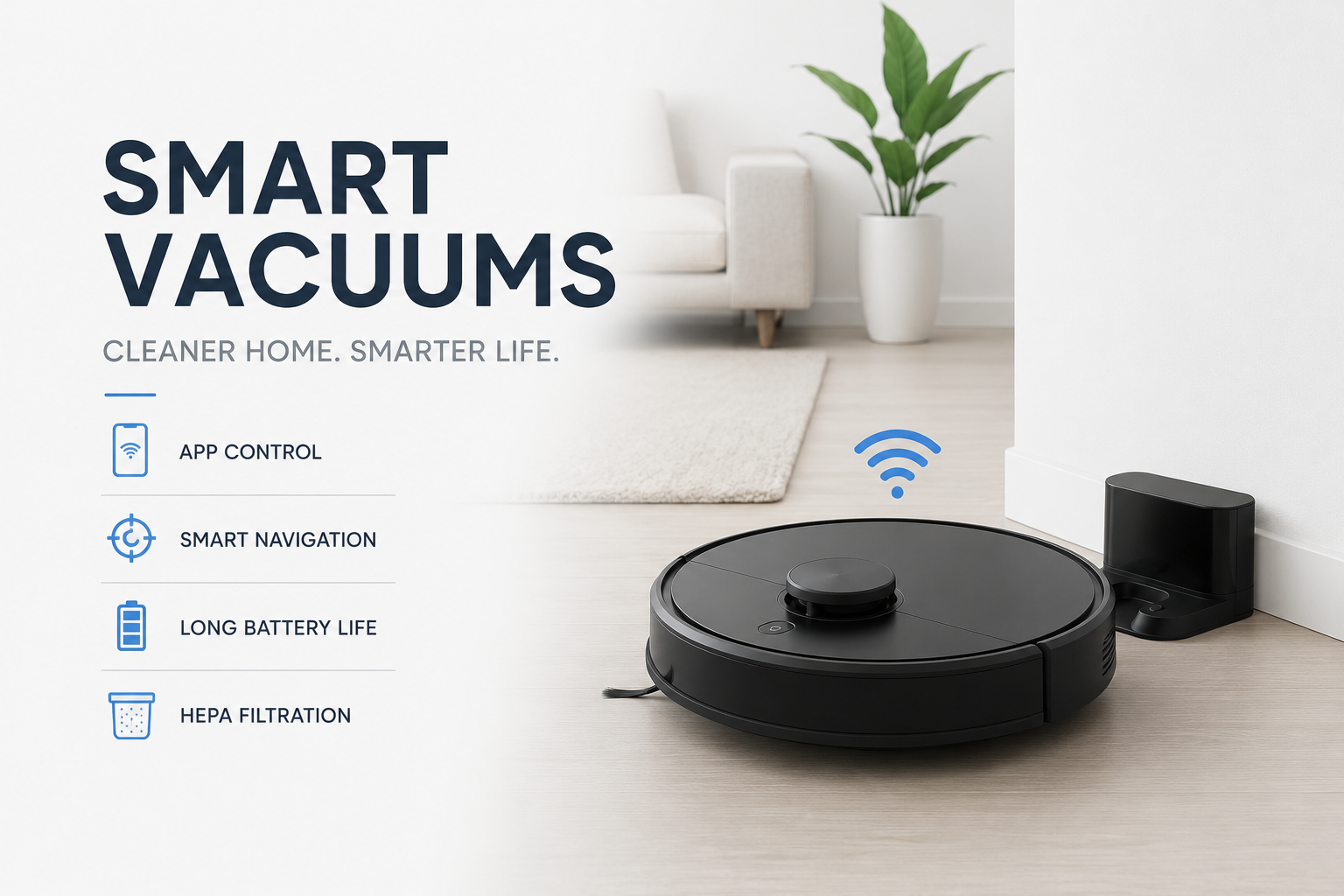
    A smart vacuum is an automated cleaning device designed to navigate and clean floors independently. Unlike traditional vacuum cleaners, smart vacuums use sensors and software to detect obstacles, map rooms, and follow efficient cleaning routes.

    Many modern models can be controlled through smartphone apps, voice assistants, and automated schedules.

    Benefits of Smart Vacuums

    Saves Time

    One of the biggest advantages of a smart vacuum is convenience. Instead of manually vacuuming every room, homeowners can schedule cleanings and let the device handle daily floor maintenance.

    Consistent Cleaning

    Smart vacuums can clean on a regular schedule, helping reduce dust, dirt, and allergens before they accumulate.

    Ideal for Pet Owners

    Many robot vacuums are specifically designed to handle pet hair, dander, and debris, making them valuable tools for households with dogs or cats.

    Reaches Difficult Areas

    Their low-profile design allows them to clean under beds, couches, tables, and other furniture that can be difficult to access with traditional vacuums.

    Smart Home Integration

    Many models work seamlessly with voice assistants, allowing users to start, stop, or schedule cleanings using simple voice commands.

    Key Features to Consider

    Smart Mapping Technology

    Advanced models create digital maps of your home, enabling more efficient cleaning patterns and room-specific controls.

    Obstacle Detection

    Modern smart vacuums can detect furniture, walls, cables, shoes, and other obstacles to avoid collisions and interruptions.

    Self-Emptying Stations

    Premium models automatically empty collected debris into a larger dustbin located at the charging station, reducing maintenance requirements.

    Mobile App Control

    Most smart vacuums include companion apps that allow users to:

    • Schedule cleanings
    • Monitor cleaning progress
    • Set no-go zones
    • Customize cleaning areas
    • Receive maintenance alerts

    Voice Assistant Compatibility

    Many smart vacuums integrate with popular voice-controlled smart home systems for hands-free operation.

    Multi-Surface Cleaning

    Quality models automatically adjust suction power when transitioning between hard floors, rugs, and carpets.

    Types of Smart Vacuums

    Entry-Level Robot Vacuums

    Designed for basic cleaning tasks, these models typically offer simple navigation and standard suction capabilities.

    Best for:

    • Small apartments
    • Budget-conscious buyers
    • Light daily cleaning

    Mid-Range Smart Vacuums

    These units often include improved mapping, stronger suction, and app-based controls.

    Best for:

    • Medium-sized homes
    • Families
    • Homes with pets

    Premium Smart Vacuums

    High-end models feature advanced AI navigation, self-emptying systems, object recognition, and highly detailed room mapping.

    Best for:

    • Large homes
    • Smart home enthusiasts
    • Busy households seeking maximum automation

    How Much Do Smart Vacuums Cost?

    Prices vary depending on features, navigation technology, and brand reputation.

    Price RangeFeatures
    $100–$300Basic navigation and cleaning functions
    $300–$700Smart mapping, app controls, improved suction
    $700–$1,200Self-emptying docks, advanced navigation, AI features
    $1,200+Premium smart home integration and top-tier performance

    While higher-priced models offer more automation, many mid-range options provide excellent value for most homeowners.

    Are Smart Vacuums Worth the Investment?

    For many households, smart vacuums offer a practical solution to everyday cleaning challenges. Although they may not completely replace traditional deep-cleaning methods, they significantly reduce the amount of manual vacuuming required.

    Benefits become especially noticeable for:

    • Families with children
    • Pet owners
    • Seniors
    • Busy professionals
    • Individuals with mobility limitations

    Maintenance Tips

    To maximize performance and lifespan:

    • Empty dust bins regularly
    • Clean brushes and rollers
    • Remove tangled hair and debris
    • Wipe sensors periodically
    • Replace filters according to manufacturer recommendations
    • Keep software updated when available

    Proper maintenance helps ensure consistent cleaning performance and reliable operation.

    Future Trends in Smart Vacuum Technology

    The next generation of smart vacuums is expected to include even more advanced artificial intelligence, enhanced object recognition, improved battery efficiency, and deeper integration with smart home ecosystems.

    Some manufacturers are already developing models capable of identifying specific objects, learning household cleaning habits, and providing detailed cleaning analytics.

    Final Thoughts

    Smart vacuums have become an increasingly valuable tool for maintaining cleaner homes with less effort. From simple entry-level models to advanced self-emptying systems, there are options available for nearly every budget and lifestyle.

    By understanding the available features, pricing, and performance capabilities, homeowners can select a smart vacuum that fits their needs and helps simplify daily cleaning routines for years to come.

  • Electric Car Maintenance: The Ultimate Guide to Keeping Your Electric Vehicle Running Smoothly

    Ahhh yes — electric car maintenance. The silent revolution gliding on electrons, not explosions. While ICE (internal combustion engine) cars chug oil and demand tune-ups like toddlers asking for snacks, EVs are like zen masters — low-maintenance, clean, and shockingly simple (pun 1000% intended).

    You ready for a full-throttle breakdown? Let’s go with:


    ⚡ Electric Car Maintenance: The Ultimate Guide to Keeping Your EV Running Smoothly

    By: The Voltage Veteran — 1,000 years under the hood, now whispering to lithium packs and regen brakes


    🔋 Table of Contents

    1. EV vs Gas: The Maintenance Mindshift
    2. What You Still Need to Maintain
    3. What You Can Forget About (Goodbye, Oil Changes)
    4. Battery Health & Longevity Tips
    5. Brakes: Regenerative Magic = Longer Life
    6. Tire Wear (Yes, It’s a Thing)
    7. Software Updates: EVs Get Smarter
    8. Coolant, Filters & Fluids (Yup, Some Still Exist)
    9. Charging Equipment Care
    10. Yearly EV Maintenance Checklist
    11. Bonus: Best Practices to Make Your EV Last
    12. Final Voltage: Why EVs Are the Future of Chill Car Ownership

    1. ⚙️ EV vs Gas: The Maintenance Mindshift

    Old way:

    • Oil changes
    • Spark plugs
    • Timing belts
    • Radiator flushes
    • Exhaust systems

    EV way:

    • Tire rotations
    • Brake inspections
    • Battery management
    • Cabin filter swaps
    • Software updates

    Translation?
    EVs have about 1/10th the moving parts of gas cars = less can break, less to maintain, and less money spent.


    2. 🧰 What You Still Need to Maintain

    Yes, EVs are simpler — but not magic.

    Here’s what you’ll still need to check regularly:

    ComponentFrequencyNotes
    TiresEvery 10,000 kmEVs are heavier = faster tire wear
    BrakesInspect annuallyLast longer, but still wear over time
    Cabin air filterEvery 20,000–30,000 kmKeeps air clean, often DIY change
    CoolantEvery 5 years (approx)Used in battery thermal management
    Wipers & washer fluidAs neededBasic upkeep
    12V batteryEvery 2–4 yearsStill needed for lights, locks, etc.

    3. ❌ What You Can Forget About (Bye Bye Forever)

    These things are relics of the gas age:

    • Oil changes 🛢️
    • Spark plugs 🔥
    • Timing belts/chains ⛓️
    • Fuel filters/pumps ⛽
    • Emission checks 🌫️
    • Exhaust/muffler issues 💨
    • Transmission fluid (in most EVs) ⚙️

    Translation?
    No more messy oil changes at 5,000 km. No more $1,200 timing belt failures. No more tailpipe drama.


    4. 🔋 Battery Health & Longevity Tips

    Your EV’s battery is its heart. Treat it right and it’ll last 10–20 years.

    DO:

    • Charge between 20–80% daily (save 100% charges for trips)
    • Use Level 1 or 2 charging when possible (slower = gentler)
    • Park in shade or climate-controlled garages
    • Drive regularly — sitting too long is bad for batteries

    DON’T:

    • Fast charge every day
    • Let the battery drop to 0% often
    • Leave at 100% for days on end

    Most EV batteries come with 8-year warranties, but with care, many go much longer with minimal degradation.


    5. 🛑 Regenerative Brakes: The Secret to Brake Longevity

    EVs use regenerative braking, which slows the car using the motor and sends power back to the battery. This means:

    • Brake pads last 2–4x longer
    • Less heat = less wear
    • Smoother stops (with one-pedal driving)

    Still, brake fluid should be checked every 2 years, and pads/rotors should be inspected annually — just to be safe.


    6. 🛞 Tire Wear: The Hidden EV Cost

    EVs are heavy. Torque is instant. Result? Tires wear faster.

    Pro Tips:

    • Rotate every 8,000–10,000 km
    • Check pressure monthly
    • Consider EV-rated tires (reinforced sidewalls, better grip)
    • Align wheels annually or after pothole hits

    Don’t sleep on tires — they’re your only contact with the road.


    7. 💻 Software Updates: Your EV Gets Smarter

    Your EV isn’t just a car — it’s a rolling computer.

    Over-the-air (OTA) updates:

    • Improve performance
    • Fix bugs
    • Add features
    • Enhance safety (Autopilot, lane assist, etc.)

    Just like your phone, keep your EV updated — it’s free maintenance that often makes the car better overnight.


    8. 🧊 Coolant, Filters & Fluids (Yes, Some Still Exist)

    Coolant:

    • Used for battery & motor thermal management
    • Change every 100,000 km or 5 years (check manual)

    Cabin Filter:

    • Replace yearly
    • Keeps pollen, dust, and road funk out

    Brake Fluid:

    • Moisture builds over time
    • Flush every 2 years (same as gas cars)

    Windshield Washer:

    • Keep it topped up — it’s the one fluid you’ll always use

    9. ⚡ Charging Equipment Care

    Your home charger (Level 2) is a long-term buddy. Treat it right.

    • Keep cords coiled and dry
    • Don’t yank the cable
    • Clean ports occasionally
    • If outdoors, use weather-rated covers

    If your charger starts acting weird, don’t delay — get it checked. Faulty charging = battery damage risk.


    10. 📋 Yearly EV Maintenance Checklist

    TaskFrequency
    Tire rotationEvery 10,000 km
    Brake inspectionAnnually
    Cabin air filterEvery 20,000–30,000 km
    Coolant checkEvery 5 years
    Software updatesAs released
    12V battery checkEvery 2–4 years
    Brake fluid flushEvery 2 years
    Wiper blade replacementYearly or as needed

    11. 🧠 Best Practices to Make Your EV Last

    • Drive smooth — instant torque is addictive, but hard on tires
    • Charge smart — overnight on Level 2 is best
    • Store at 50–70% if unused long-term
    • Keep it clean — paint, underbody, and wheels need love too
    • Document everything — service records help resale

    12. ⚡ Final Voltage: Why EVs Are the Future of Chill Car Ownership

    Imagine a car that:

    • Doesn’t need oil
    • Rarely sees a shop
    • Updates itself while you sleep
    • Costs cents per mile to drive
    • And runs like a spaceship

    That’s the EV life. Simple. Quiet. Efficient. And low-maintenance like a dream.


    Want this expanded into:

    • A blog post
    • A YouTube video script
    • A branded EV owner’s guide PDF
    • Or a “Tesla vs Others” comparison section?

    Say the word — I’ll plug in and power up the perfect content for your mission.

  • Top Smart Home Appliances and Devices in 2025

    1. Smart Thermostat

    Example Models: Google Nest Learning Thermostat, Ecobee Smart Thermostat Premium
    Price Range: $150–$250
    Key Specs:

    • Compatibility: Works with Alexa, Google Home, Apple HomeKit (Ecobee).
    • Connectivity: Wi-Fi, Bluetooth, sensors for occupancy and temperature.
      Pros:
    • Learns your schedule and optimizes heating/cooling for energy savings (up to 15% on bills).
    • Remote control via app or voice commands.
    • Geofencing adjusts settings when you leave/return.
      Cons:
    • High upfront cost.
    • Requires a C-wire for installation in some homes.
    • Limited utility in mild climates.
      Summary: A must-have for energy-conscious homeowners, though installation complexity varies.

    2. Smart Speaker

    Example Models: Amazon Echo (4th Gen), Google Nest Audio, Apple HomePod 2
    Price Range: $50–$300
    Key Specs:

    • Voice Assistants: Alexa, Google Assistant, Siri.
    • Audio Quality: Dolby Atmos (HomePod), adaptive sound.
      Pros:
    • Central hub for controlling smart devices via voice.
    • Multi-room audio synchronization.
    • Built-in Zigbee hubs (Echo) for direct device pairing.
      Cons:
    • Privacy concerns with always-on microphones.
    • Speaker quality varies by price tier.
    • Ecosystem lock-in (e.g., HomePod works best with Apple devices).
      Summary: The backbone of voice-controlled smart homes, but choose based on your preferred ecosystem.

    3. Smart Lighting System

    Example Models: Philips Hue, LIFX, Nanoleaf
    Price Range: $30–$200 per bulb/panel
    Key Specs:

    • Connectivity: Wi-Fi, Zigbee (Hue), Thread (Nanoleaf).
    • Features: Color-changing, schedules, scenes.
      Pros:
    • Customizable ambiance (16 million colors with Hue).
    • Energy-efficient LED bulbs.
    • Integrates with motion sensors and sunrise/sunset routines.
      Cons:
    • Requires a hub for some systems (e.g., Hue Bridge).
    • Expensive to outfit an entire home.
    • Limited brightness compared to traditional bulbs.
      Summary: Ideal for mood lighting and automation, but costs add up quickly.

    4. Smart Security Camera

    Example Models: Arlo Pro 4, Google Nest Cam (Battery), Ring Stick Up Cam
    Price Range: $100–$300
    Key Specs:

    • Resolution: 2K/4K video, night vision, 160°+ field of view.
    • Storage: Cloud (subscription) or local (microSD).
      Pros:
    • Real-time alerts and two-way talk.
    • Weatherproof for outdoor use.
    • AI detection for people, pets, and packages.
      Cons:
    • Subscription fees for advanced features (e.g., Arlo Secure).
    • Limited battery life on wireless models.
    • Privacy risks if hacked.
      Summary: Essential for remote monitoring, but opt for local storage to avoid monthly fees.

    5. Smart Doorbell

    Example Models: Ring Video Doorbell Pro 2, Google Nest Doorbell (Wired)
    Price Range: $100–$250
    Key Specs:

    • Resolution: 1536p HD, HDR, head-to-toe viewing.
    • Power: Wired or battery-operated.
      Pros:
    • Deters porch pirates with motion-triggered recording.
    • Pre-recorded responses for deliveries (e.g., “Leave by the garage”).
    • Integrates with smart locks and lights.
      Cons:
    • Requires subscription for video history.
    • Installation can be tricky for wired models.
    • Limited functionality in extreme temperatures.
      Summary: A game-changer for home security, but subscription plans are a recurring cost.

    6. Smart Lock

    Example Models: August Wi-Fi Smart Lock, Yale Assure Lock 2
    Price Range: $150–$300
    Key Specs:

    • Connectivity: Bluetooth, Wi-Fi, Z-Wave.
    • Power: Rechargeable or AA batteries.
      Pros:
    • Keyless entry via app, code, or fingerprint (Yale).
    • Grants temporary access to guests.
    • Auto-locks when you leave.
      Cons:
    • Battery replacement required every 6–12 months.
    • Compatibility issues with some door types.
    • High-end models are pricey.
      Summary: Perfect for ditching keys, but ensure compatibility with your door.

    7. Robot Vacuum

    Example Models: iRobot Roomba j7+, Roborock S8 Pro Ultra
    Price Range: $300–$1,400
    Key Specs:

    • Navigation: LiDAR mapping, obstacle avoidance (Roomba j7+ detects pet waste).
    • Features: Self-emptying bins, mopping (Roborock).
      Pros:
    • Hands-free cleaning with scheduled routines.
    • Detailed home mapping and no-go zones.
    • Mops hard floors (high-end models).
      Cons:
    • Struggles with thick carpets and stairs.
    • Loud during operation.
    • Expensive repairs.
      Summary: Saves time on daily chores, but premium models are an investment.

    8. Smart Oven

    Example Models: June Oven, Breville Smart Oven Air Fryer
    Price Range: $250–$6,000
    Key Specs:

    • Features: Air frying, convection baking, app-guided recipes.
    • Connectivity: Wi-Fi, internal cameras (June).
      Pros:
    • Preheats remotely via app.
    • AI recognizes food and adjusts cooking (June).
    • Multi-functionality replaces multiple appliances.
      Cons:
    • High-end models cost as much as traditional ovens.
    • App connectivity can be glitchy.
    • Limited counter space for large models.
      Summary: A gourmet upgrade for foodies, but practicality depends on kitchen size.

    9. Smart Refrigerator

    Example Models: Samsung Family Hub, LG InstaView
    Price Range: $2,500–$6,000
    Key Specs:

    • Features: Touchscreens, internal cameras, voice control.
    • Connectivity: Wi-Fi, Alexa/Google Assistant.
      Pros:
    • View contents remotely via internal cameras.
    • Track expiration dates and create grocery lists.
    • Stream music or TV on the door panel.
      Cons:
    • Extremely expensive.
    • Touchscreens may lag or become outdated.
    • Repairs are costly and complex.
      Summary: A luxury for tech enthusiasts, but not essential for most households.

    10. Smart Washer/Dryer

    Example Models: LG ThinQ, Samsung Bespoke
    Price Range: $1,000–$2,500
    Key Specs:

    • Features: Remote cycle control, steam cleaning, energy monitoring.
    • Connectivity: Wi-Fi, voice commands.
      Pros:
    • Start/stop cycles from your phone.
    • Alerts when a load is done.
    • Diagnoses issues via app.
      Cons:
    • Minimal energy savings vs. “dumb” models.
    • Connectivity adds little value for basic users.
    • Premium pricing.
      Summary: Convenient for large households, but traditional models offer similar performance.

    Bonus: Smaller Smart Devices

    • Smart Plugs ($10–$40): Turn any appliance into a smart device. Look for energy monitoring (e.g., Kasa).
    • Smart Sensors ($20–$50): Detect leaks, motion, or open doors (e.g., Aqara).
    • Smart Blinds ($200–$500): Automate shades based on sunlight (e.g., Lutron Serena).

    Key Trends in 2025:

    1. Interoperability: Matter protocol enables cross-brand compatibility (launched in late 2022).
    2. Energy Savings: Smart thermostats and plugs reduce utility bills by 10–20%.
    3. Privacy Concerns: Opt for local storage (e.g., Eufy cameras) to minimize cloud vulnerabilities.
    4. Voice Dominance: 75% of smart homes use Alexa or Google Assistant.

    Final Tip: Start with a smart speaker and thermostat, then expand based on your needs. Prioritize devices that support Matter for future-proofing!