Immigrants’ Lawyers Say U.S. Is Redacting Documents That Could Prove Legal Status
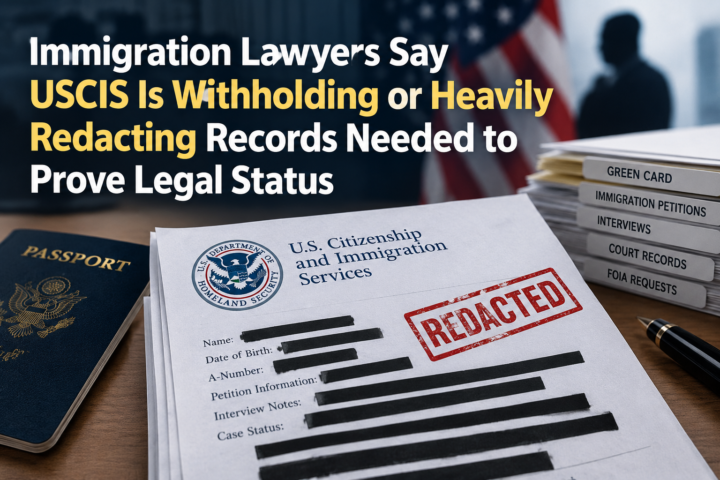
A troubling issue is being raised by immigration lawyers: some immigrants who request government records needed to prove their legal status are reportedly receiving heavily redacted documents — or being told that records cannot be found.
According to The New York Times, dozens of immigration lawyers say these delays and redactions are making it harder for their clients to defend themselves in immigration proceedings, obtain lawful status, or challenge old immigration orders.
The records involved can be extremely important, including:
• Previous immigration petitions
• Green-card applications
• Interview transcripts
• Immigration court records
• Passports and citizenship-related documents
• Evidence connected to prior applications and family relationships
One former senior USCIS records official, Timothy Turner, alleged that internal policies introduced during the second Trump administration made it more difficult for immigrants to obtain records they are legally entitled to receive.
Turner testified that USCIS closed more than 35% of records requests from immigrants facing deportation between September 2025 and March 2026 without providing documents, compared with about 8% during the preceding six months.
Immigration attorneys interviewed by the Times described cases in which records they believed existed were reportedly withheld, heavily redacted, or difficult to obtain in time for immigration hearings.
One case involved a Mexican national who requested a decades-old green-card petition filed by his U.S.-citizen mother. More than half of the records he received were reportedly completely redacted, while he is now facing deportation.
Another attorney said he ultimately sued the government after his client’s records were reportedly unavailable through the normal FOIA process. After the lawsuit was filed, the government produced the requested records, according to court documents reviewed by the Times.
USCIS says it carefully verifies the identity of people requesting records because immigration files often contain information about multiple individuals. The agency also says it informs requesters when records cannot be located or when identity cannot be definitively established.
The bigger question is whether these delays and redactions are simply the result of privacy and administrative requirements — or whether, as some immigration lawyers and a former USCIS official allege, they are making it unnecessarily difficult for immigrants to access records that could be critical to their cases.
For someone facing immigration court, a document arriving months or even years later may be very different from a document arriving before the hearing.