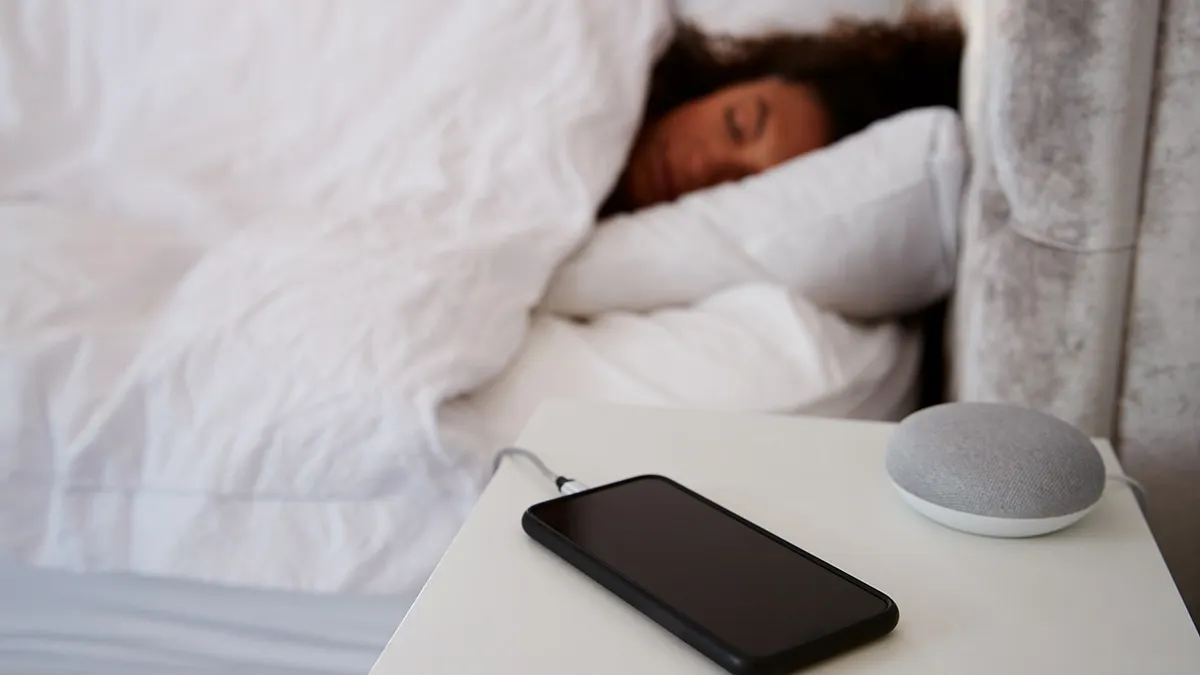

If your smartphone stays on your bedside table overnight, it stays busy long after you fall asleep.
Even while it appears idle, your phone continues to send and receive data in the background. Some of that activity is expected. Your device checks for security patches, syncs system settings and keeps essential services running. Other data transfers are far less obvious and far less necessary.
Experts warn that smartphones routinely transmit tracking and advertising signals without you fully realizing it. In many cases, that data includes information that should only be shared with clear and informed consent.
SUPER BOWL SCAMS SURGE IN FEBRUARY AND TARGET YOUR DATA
Even while you sleep, a nearby smartphone can continue sending and receiving data in the background. (Getty Images/monkeybusinessimages)
What data your phone sends while you sleep
Your phone is not just charging overnight. It operates in a continuous data loop that generally falls into two categories.
Legitimate system data
This includes updates, crash reports and basic diagnostics. Operating systems rely on this information to fix bugs, improve stability and protect against security threats. In most cases, this data collection is disclosed and configurable.
Tracking and advertising data
This is where concerns grow. Smartphones also transmit location signals, device identifiers, advertising IDs, usage patterns and app behavior data. Companies combine this information to build detailed user profiles and deliver targeted ads that promise higher engagement. The problem is that the line between necessary diagnostics and commercial tracking is often blurry. Many of us never realize how much data flows out of our phones overnight.
TIKTOK AFTER THE US SALE: WHAT CHANGED AND HOW TO USE IT SAFELY
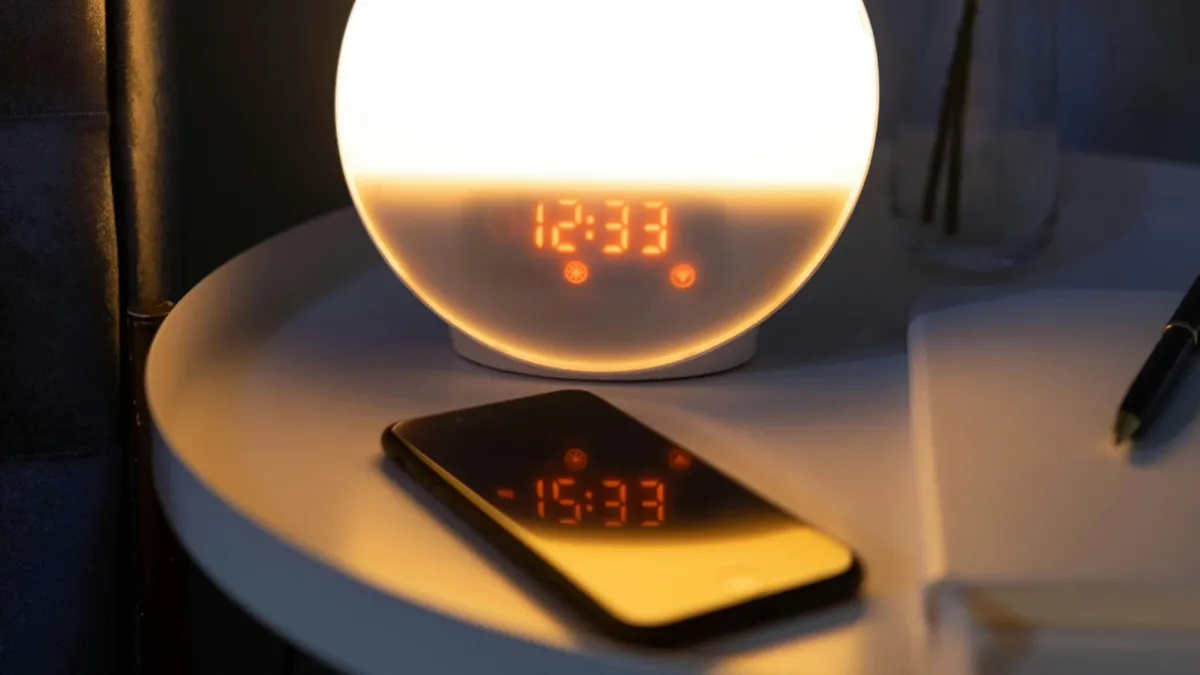
Phones often stay active overnight, syncing apps, checking networks and refreshing data unless you limit background activity.
What we know about phone tracking today
Independent academic investigations found that some Android devices transmitted data linked to tracking behaviors involving major companies like Meta and Yandex. The research, conducted by teams from IMDEA Networks Institute and European universities, showed that certain apps and services continued communicating with external servers even after users attempted to limit tracking. The researchers observed data flows that could link web activity with app identifiers, raising concerns about how effectively privacy controls were enforced at the system level.
There is also long-standing concern around smartphones appearing to “listen” to conversations. While no public evidence shows that phones actively record private speech for advertising, many users report ads that closely mirror recent conversations. At a minimum, aggressive data collection combined with location, app usage and search history can make these moments feel unsettling.
Despite years of scrutiny, most smartphones still operate this way today. The good news is that you can reduce how much data leaves your device.
How to protect yourself from overnight data sharing
You do not need to give up your smartphone to regain control. Small settings changes can make a real difference.
1) Review app permissions
Start with your installed apps. Focus on those with access to your location, microphone, camera and tracking data. Only allow sensitive permissions while the app is in use. Be especially cautious with apps that run continuously in the background.
How to review app permissions on iPhone
- Open Settings
- Tap Privacy & Security
- Tap Location Services, Microphone, Camera or Tracking
- Select an app from the list
- Choose While Using the App or Never when available
For tracking controls:
- Go to Settings
- Click Privacy & Security
- Tap Tracking
- Turn off Allow Apps to Request to Track
This prevents apps from accessing your advertising identifier and sharing activity across apps and websites.
AI WEARABLE HELPS STROKE SURVIVORS SPEAK AGAIN
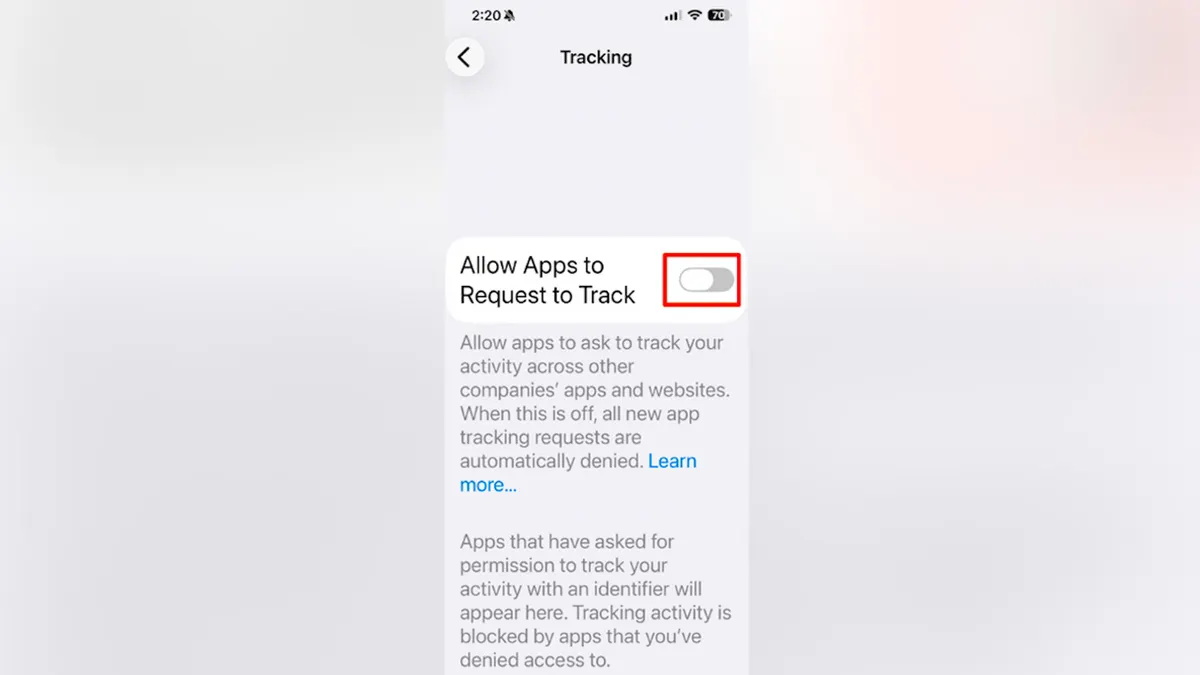
Turning off app tracking on your iPhone blocks apps from linking your activity across other apps and websites.
How to review app permissions on Android
Settings may vary depending on your Android phone’s manufacturer.
- Open Settings
- Tap Privacy & Security or Security and privacy
- Click More privacy settings
- Tap Permission Manager
- Select Location, Microphone, Camera or Sensors
- Tap an app and choose Allow only while using the app or Don’t allow
To review background access:
- Go to Settings
- Click Apps
- Select an app
- Tap Mobile data & Wi-Fi
- Turn off Background data if the app does not need constant access
This limits silent data transfers when the app is not actively open.
2) Limit background activity
Disabling background activity reduces how often apps sync data when you are not using them. This also limits automatic cloud activity. Keep in mind that this may affect real-time backups or notifications. Weigh the convenience against the privacy trade-off.
How to limit background activity on iPhone
Turn off Background App Refresh
- Open Settings
- Tap General
- Tap Background App Refresh
- Tap Background App Refresh at the top
- Select Off or Wi-Fi
To disable it for specific apps:
- Stay on the Background App Refresh screen
- Toggle off apps that do not need to update in the background
This prevents apps from quietly syncing data when they are not open.
How to limit background activity on Android
Settings may vary depending on your Android phone’s manufacturer.
Restrict background data
- Open Settings
- Tap Apps
- Select an app
- Tap Mobile data & Wi-Fi
- Turn off Background data
Restrict background battery usage
- From the app’s settings screen, tap Battery
- Select Restricted or Limit background usage
This reduces background syncing and prevents apps from running silently when you are not actively using them.
3) Turn off personalized advertising
Personalized ads rely on device identifiers and activity data collected across apps. Turning this off limits how your behavior is used for ad targeting, even when your phone is idle.
How to turn off personalized ads on iPhone
- Open Settings
- Tap Privacy & Security
- Tap Tracking
- Turn off Allow Apps to Request to Track
To limit Apple ads:
- Go to Settings
- Click Privacy & Security
- Tap Apple Advertising
- Turn off Personalized Ads
This reduces ad targeting based on your activity within Apple services.
TAX SEASON SCAMS SURGE AS FILING CONFUSION GROWS
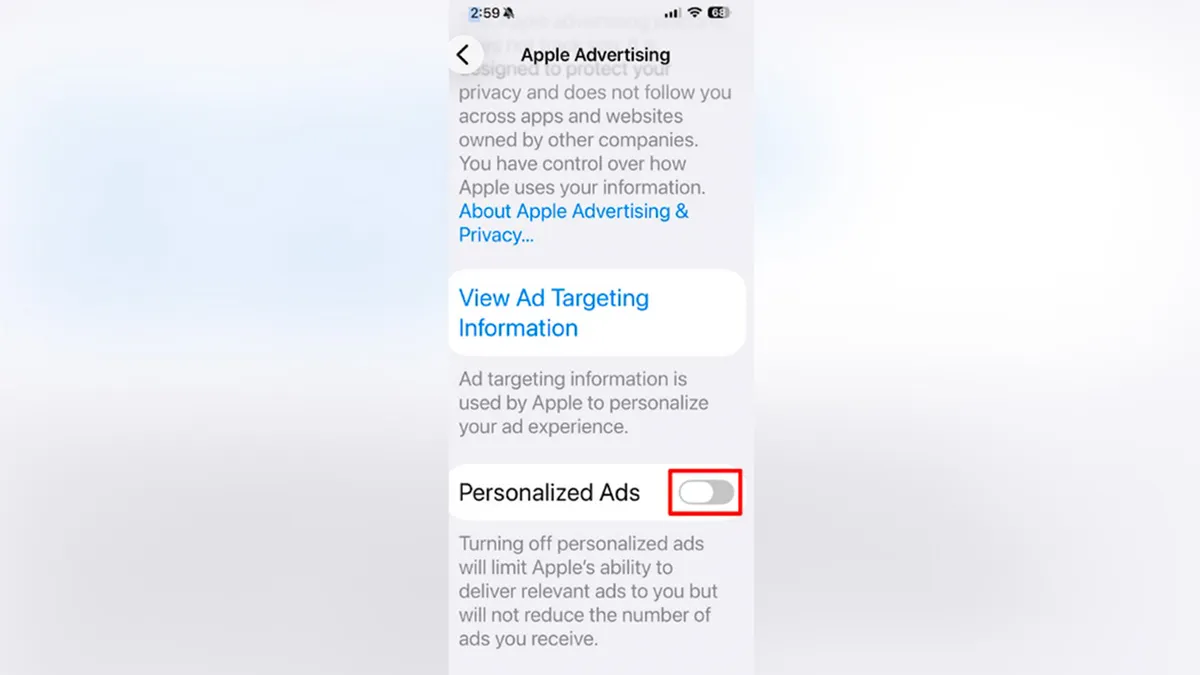
Disabling personalized ads reduces how your behavior is used to target ads, even when your phone is idle.
How to turn off personalized ads on Android
Settings may vary depending on your Android phone’s manufacturer.
- Open Settings
- Tap Privacy & Security or Security and privacy
- Click More privacy settings
- Tap Ads or Advertising
- Tap Delete advertising ID or Opt out of Ads Personalization
- Click Delete advertising ID
You can also reset your advertising ID from this menu to break the link between past activity and future ads.
This limits how apps and advertisers track behavior across apps and websites.
4) Consider a VPN
A reputable VPN can help obscure your IP address and reduce certain forms of network-based tracking. It does not stop all data collection, but it adds a layer of protection, especially on shared or public networks.
5) Remove your data from broker sites
Even if you lock down your phone, much of your personal information already exists online. Data brokers collect and sell details like your name, address, phone number and browsing behavior.
Using a reputable data removal service can help locate and remove your information from these sites. This reduces how easily advertisers and third parties can link your phone activity to your real identity.
For ongoing protection, these services do all the work for you by actively monitoring and systematically erasing your personal information from hundreds of websites. It’s what gives me peace of mind and has proven to be the most effective way to erase your personal data from the internet. By limiting the information available, you reduce the risk of scammers cross-referencing data from breaches with information they might find on the dark web, making it harder for them to target you.
6) Use airplane mode or power off at night
If overnight data sharing concerns you, the simplest option is also the most effective. Turning your phone off or using airplane mode cuts off wireless communication while still allowing alarms to work.
How to turn on airplane mode on iPhone
- Open Control Center by swiping down from the top right corner
- Tap the airplane icon so it turns orange
- Confirm that cellular, Wi Fi and Bluetooth turned off
How to turn on airplane mode on Android
Settings may vary depending on your Android phone’s manufacturer.
- Swipe down from the top of the screen to open Quick Settings
- Tap the airplane mode icon
- Check that mobile data, Wi Fi and Bluetooth are disabled
If you still want Bluetooth for a watch or headphones, you can turn it back on manually after enabling airplane mode. This keeps most background data transfers blocked while you sleep.
Key takeaways
Your smartphone works around the clock, even when you do not. Some background data sharing keeps your device secure and functional. Other data collection exists primarily to fuel tracking and advertising. The key is awareness and control. By tightening permissions, limiting background activity and disabling ad personalization, you reduce how much of your personal data leaves your phone while you sleep. Privacy is not about fear. It is about informed choices.
